Family Owned & Operated Since 1972

HDO Concrete Form Panels

The Best Value in a Multi-Pour Panel

If you are looking for a concrete forming panel that gives optimal finish with a minimum of grain telegraphing then you have found what you want in Eagle’s HDO fir plywood panels.

In addition, when the job requires 10 and more pours, HDO is the most cost effective plywood product.

Eagle’S HDO is manufactured using thermosetting resinimpregnated fiber bonded to both sides of the plywood. Under heat and pressure the resins flow to create a smooth, durable, and chemically resistant forming panel. This surface represents the latest in research and development from Arclin® – the world leader in overlay technology.

Designed to the highest standards of quality assurance, our HDO panels give the user a uniform surface that promotes uniform hydration. The result is an excellent concrete finish. Abrasion and chemical resistance are important when extended reuse is part of your equation.
Through proper handling, cleaning, and application of release agents, HDO will outlast competitive products pour after pour.
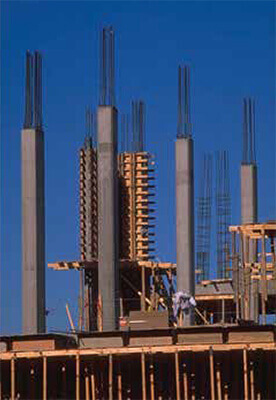
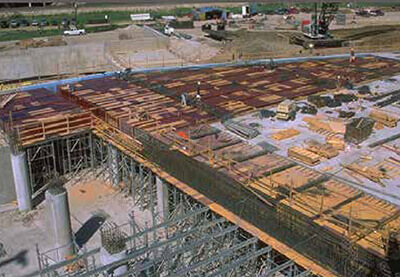
HDO Concrete form panels used on a large construction site

line drawing of pine trees

HDO Concrete form panels used on a large construction site

We Offer More Choices

  • Thickness: 3/8″, 1/2″, 5/8″, 11/16″, 3/4″, 1″, 1-1/8″, 1-1/4″, 1-1/2″
  • Width: 2′, 4′
  • Length: 8′, 9′, 10′, 12′ with continuous non-scarfed panel
  • Available in both Good-1 side and Good-2 side
  • Grade stamped with the APA trademark and PS-1
  • Silver factory applied edge seal
  • Standard Class 1 concrete forming designation. Struc 1 available on request
  • Ship by rail, truck, van or container

Engineered for Performance

Eagle HDO panels are available in a variety of thicknesses and sizes. The panel thickness requirements are based on the pressures of the concrete, the form work support structure and all other associated loads. Below are tables that illustrate the allowed concrete pressures for various HDO panel thicknesses at commonly used support spacings. The highest values are achieved when the face grain of the plywood is at right angles to the supports. These values are shown in Table 1.

Somewhat lower values occur when the face grain of the plywood is parallel to the supports. These tables are derived from the structural properties of
plywood and reflect the standards of APA and PS-1. Note also that an unsupported panel edge may deflect more that the panels center under certain
high moisture or load conditions.

Eagle is unique among HDO manufacturers in our ability to produce up to 4′ x 12′ panels with a continuous overlay surface (non-scarfed panel).

Long Direction Across Supports – Plywood Continuous Across Two or More Spans

TABLE 1 PLYWOOD THICKNESS – ALLOWABLE PRESSURE (PSF)
1/2″ 5/8″ 3/4″ 1-1/8″
SUPPORT
SPACING
l/360 l/270 l/360 l/270 l/360 l/270 l/360 l/270
8″ 1155 1155 1365 1365 2040 2040 2949 2949
12″ 490 515 705 845 995 995 1826 1826
16″ 210 280 320 395 495 560 1157 1199
19.2″ 120 160 190 255 300 390 755 832
24″ 100 130 160 215 432 533

Short Direction Across Supports – Plywood Continuous Across Two or More Spans

TABLE 2 PLYWOOD THICKNESS – ALLOWABLE PRESSURE (PSF)
1/2″ 5/8″ 3/4″ 1-1/8″
SUPPORT
SPACING
l/360 l/270 l/360 l/270 l/360 l/270 l/360 l/270
8″ 485 555 775 775 1690 1690 2586 2586
12″ 140 185 355 410 715 815 1601 1601
16″ 150 200 310 415 957 1028
19.2″ 105 130 225 255 571 571
24″ 115 155 365 365

Preparation

HDO panels are edge sealed at the mill with a high quality waterbase coating. During form work construction, plywood edges are often exposed by sawing and drilling. These edges should be sealed with two coats of a high quality waterbase paint. This slows down the penetration of water which can cause
panel swelling, edge failure, and staining. HDO panels are not factory release coated. Prior to each pour, lightly coat the panel surfaces with a
chemically reactive form release.

This coating helps produce a quality concrete finish as well as prolong the life of the panels. Follow the manufacturer’s recommendations for
application rate.

Stripping

Panels last longer when handled properly. Don’t use metal pry bars; they damage the plywood surface. Wood wedges work the best.

Cleaning

Panel surfaces should be cleaned of concrete residue as soon after stripping as possible. Failure to remove concrete residue prevents a good release on the next pour. Panel life is shortened and the concrete surface compromised. Use wood or plastic scrapers, fiber brushes or burlap. Do not use metal. Panels should be inspected for damage. Minor dents and dings can be patched with auto body putty.

Handling and Storage

Careful handling and proper storage will prolong the usability of HDO plywood. Dropping panels is one of the most common ends to an otherwise good panel. Panels should be stored flat and protected from weather and sun.